When is something good? How do we know we are doing good work?
Is there an objective standard that church technical artists can use to make sure the effort that we are putting in is paying off?
How do we know if our transitions are good? Or the infrastructure we are adding to the word and worship is good?
Ultimately, it’s really about the service itself, as an entity, how do we know it is good?
The longer I live, the more I serve Christ, the more I am compelled to take a long view of history and an eternal perspective toward the few small years comprising our life on earth. I love the emphasis I often hear calling for increasing the Church’s role in societal restoration. These are big issues and range in areas diverse as long-standing nationalistic enmity, to racism and racial disagreement and distrust, to environmental awareness and care, and the list goes on. This adjustment seems to me to be the right track. After allowing the pendulum to swing too far to individual evangelism, it is appropriate to look at the church’s role in the world that goes beyond just trying to get people to say the sinner’s prayer.
I also recognize that this is perhaps uniquely an evangelical problem. And an American Evangelical problem at that. Mainline churches, for all of the flack they catch from others in the evangelical community, are now being seen as a source of some stabilizing and “successful” practices: liturgy, comprehensive catechism, and this stance of social restoration that I am talking about. It’s almost as if the younger brother is just now waking up to the family business that has been going on for hundreds of years. At least that’s what it feels like in the church circles I move in.
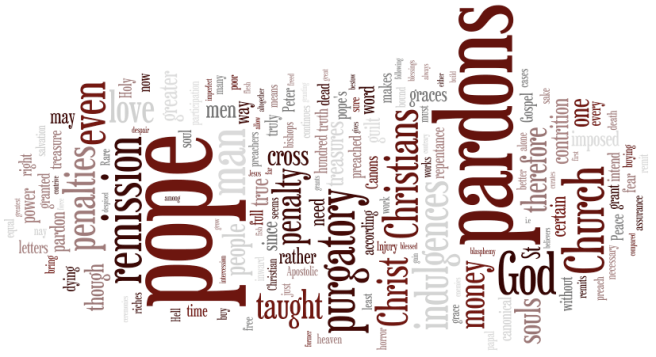
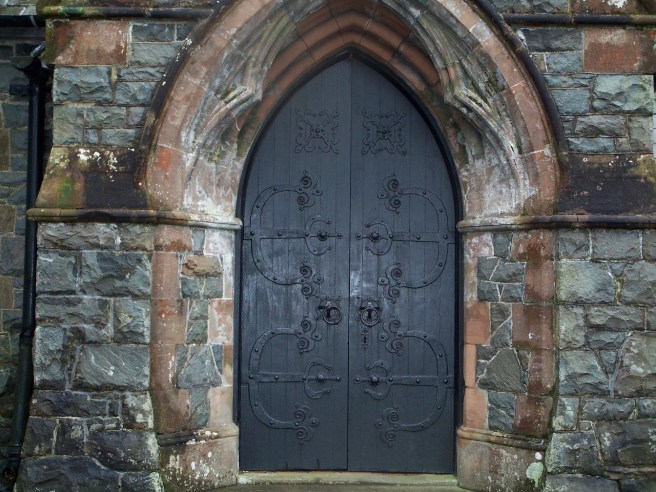
With that caveat in mind, I must confess, I’ve been thinking a lot lately about indulgences. You know, those things we were taught to protest against as Protestants. You know, those things that caused Martin Luther to nail 95 Theses to a door.
1. Open to others. Not a fort against the world, but a thanksgiving table with an open seat for anyone.
2. Expanding the government of heaven. Not trapped in politics — not preaching the values of the religious right or the left, but contending for Christlikeness that is both a higher demand and a lighter burden.
3. An active part and participant in the community extending neighborly generosity and working for the common good and human flourishing.
4. A place of community and conversation. The Sunday service is less school and more family gathering.
5. A place of diversity. Not a church that is primarily led by and for one race, one generation, or one class; but empowers all, because the Spirit empowers all. A church that reflects the demographics of the entire community but also gives special place and care to the downtrodden and disenfranchised.
6. A church that values the arts and is artistic and creative in worship and in creating a worship space and environment.
7. A church that contends for the presence of God in passionate worship and prayer.
8. An ancient / future faith. A church that values the traditions of the past—that actively incorporates liturgical practices and weekly eucharist—while implementing the opportunities of new media to make mature disciples (people who can hear God’s voice for themselves, and obey it).
What’s your dream?
I’d be interested to know what you think. Do any of these resonate with you?
Even if you choose not to share it here, I encourage you to dream away. And then pray about the things that God is speaking to your heart.
There is great power in our metaphors. The words we use to think about things shapes what we do.
In many of the circles I move in, there is a growing resistance to referring to the church as a business. I’m not opposed to that; however, it is one thing to deconstruct a failed model, it is another to be able to explain and point to the correct model.
I believe family is the God-ordained model, but family is the correct metaphor for church only to the degree that we have a correct view of family. I have a few caveats before we jump in with both feet.
Excellence is taking a hit. In my opinion, it’s a cruel task master and more and more people are noticing. The correction is a necessary one. Anytime we are using people to build church, we’re upside down. In the Kingdom of God, we don’t tap into people like batteries and discard them after using them up. Many techs I know have been burned by churches who seemed to have had that attitude.


 Technically Thinking