As a person who has spent their whole life in church and working in church and ministry, I have been an advocate to anyone who would listen that we have a gigantic discipleship problem in Evangelical and Evangelical adjacent places. I now believe I am wrong.
[*If you need it, see below for a caveat.]
Here’s what I’m thinking.
What is Discipleship?
Discipleship is a Christ-followers active engagement to discern God’s will and voice for themselves and then obey in a lifestyle of sacrificial love with Jesus as our model. There are practices (or habits, or disciplines) that we adopt to maintain that connection to the Holy Spirit. The simple ones are prayer, Bible study, and fellowship and commitment to other followers of Christ. There are more of course.
None of this should be revolutionary.
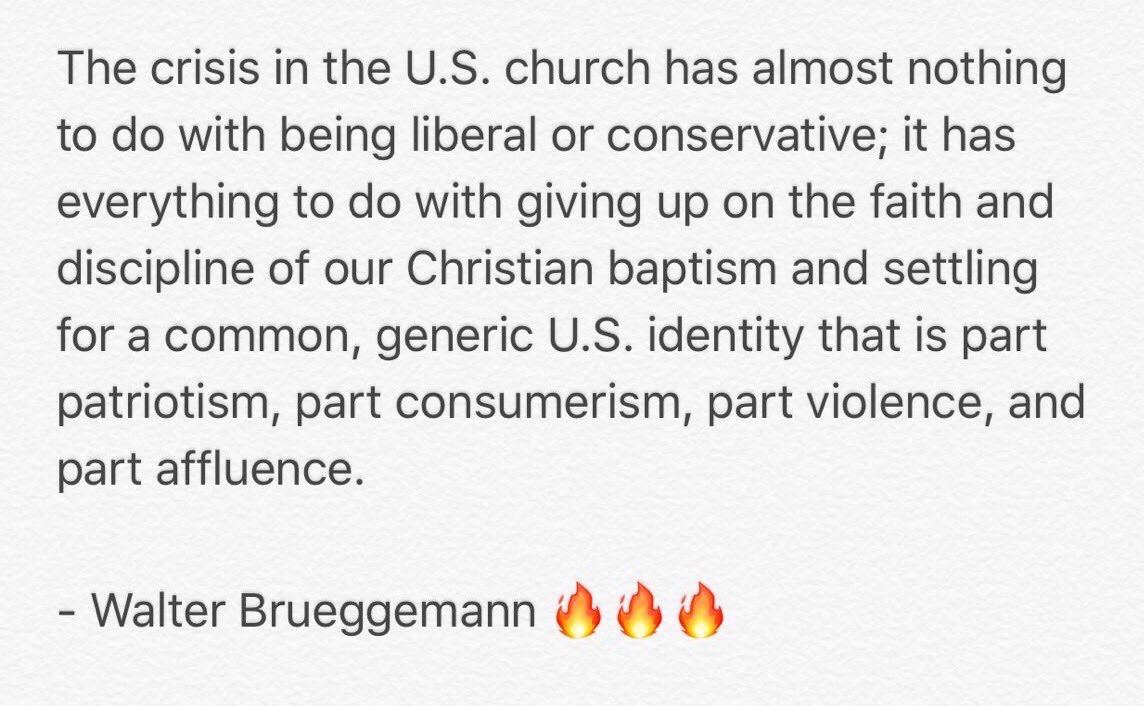
We have generations of American church goers that are nominally christian but have little evidence that they are involved in this discipleship process, but (and here is the big kicker) they have evidence that they are adherents to American civil religion: a form of patriarchal, family values; consumerism/materialism; militarism; and being a good, white, middle class person. It is a syncretism between western culture’s definition of liberty with biblical sounding names. Perhaps first century Christians had it easier with Rome’s clear paganism and idolatry while we have ours wrapped in centuries of Christian language. Perhaps.

A Note About Systems
Systems are perfectly designed to produce the results they produce. This is axiomatic. We often call a system broken or dysfunctional when it is producing unwanted results. In one way this is true, in another way it is not. The system needs to be seen as working properly. Generally, in my experience, we lay the blame at the feet of people who, we say, are not following the program. Instead, if there is a problem, and I am drawing a fine hair distinction here, it is that we have a system that is working as it is designed to do—but it is committed to the wrong set of principles and goal.
Said another way, in many churches, our discipleship systems are working properly if the goal is to create adherents of American civil religion, because that is what they are producing. While our systems are dysfunctional (if the goal is Christ-followers), it is not true that they are not working as designed. The systems are working well. That is what we must come to see. I have spent most of my time thinking the systems are not working. This is where I have been wrong.
- Church leaders are bowing at the feet of corporate principles, but lack the courage to challenge their congregations to the revolutionary lifestyle that models Jesus. What does it profit to grow your church and lose your soul?
- Christians hold the American flag as sacred and pledge allegiance to what it embodies. Sacred means connected with God (or the gods) or dedicated to a religious purpose and so deserving veneration (Apple’s dictionary). That’s idolatry for those who profess allegiance to Christ.
- Women are denigrated to second class status and denied their full humanity… in churches!
- The most racist segments of our society are so-called Christians who find justification in the same Bible interpretations employed by enslavers of 200 years ago. The KKK was an America-first organization that wanted to return to a “Christian” hierarchy. It has many adherents today, although they don’t have the courage to go by that name they have adopted the Christian Nationalism label and written books in defense of this ideology.


All of which is never challenged in our sermons and Bible study materials. In fact, it is propagated in our materials. The system is working as designed. We ought to know better.
So What’s the Antidote?
Though perhaps hard to hear, much of what we say is Christian is simply not. This is why I have been a fan of deconstruction. The closer you get to Jesus, the more you realize you cannot stay within a false religion. Do some take it too far? Perhaps. Better than not far enough, I say. Wildfire is better than no fire. I’ll take a radical pursuit of good over status quo compromise any day.
4 Then I heard another voice from heaven say:
“‘Come out of her, my people,’[a]
Revelation 18:4
so that you will not share in her sins,
so that you will not receive any of her plagues;
We need to shake the dust off our feet from a compromised, American civil religion/Christian Nationalism/slaveholder religion and recommit to the Kingdom of God’s shalom.
There are a few principles that I believe would be prescriptive for those who are looking for a cure and truly want to follow Christ:
- Eschew fundamentalism and anti-intellectualism. I am happy to see a resurgence among average Christians in scholarly conversations about the Bible. Podcasts seem to be helping this as more people are made aware of these conversations and they are more accessible to the average person like me. We need a more robust interpretation of scripture that doesn’t prop up our cultural compromises. OnScript and The Bible for Normal People and the Jude 3 Project are good resources here.
- I would like to see more practical help in developing a personal prayer life. Not the quiet time of my youth, but an engaging, contemplative union with Jesus. Brian Zahnd’s prayer school is the kind of thing I am thinking about. Here’s a link to some of his thoughts on prayer.
- We need to submit to leadership that is outside the rutted grooves of white evangelicalism and the stranglehold of white supremacy. This means non-white leadership. Yes, I am making a blanket statement. It is not an accident that Black Christians in America continue to outpace other groups in orthodoxy, Bible reading, and prayer. For many of us, we need to relearn what it means to be a Christ-follower, so let’s go to where the real Christians are and submit to their leadership.
Begin here, the rest will take care of itself. If you seek, you will find. If you knock the door will be opened.
Conclusion
We don’t have a discipleship problem, we have a competing religion functioning as designed all around us.
Resources for further reflection:
- Reconstructing the Gospel: Finding Freedom from Slaveholder Religion
by Jonathan Wilson-Hartgrove - Jesus and John Wayne: How White Evangelicals Corrupted a Faith and Fractured a Nation
by Kristin Kobes Du Mez - The Making of Biblical Womanhood: How the Subjugation of Women Became Gospel Truth
by Beth Allison Barr - Was America Founded as a Christian Nation?
John Fea - The Color of Compromise
Jemar Tisby
*Caveat
I can hear someone saying, “NOT ALL, Mike,” as they read this. OK. Fine. Sure there are faithful Christians still in these places. That’s who I’m writing to.

 Technically Thinking